Health and Safety Policy for Cleaners Greenwich
 This health and safety policy sets out the standards expected from all staff, supervisors, and contractors involved in cleaning services in Greenwich. It is designed to protect employees, clients, visitors, and anyone who may be affected by cleaning activities. The policy applies to routine domestic cleaning, office cleaning, end-of-tenancy tasks, specialist sanitation, and all other work carried out under the Cleaners Greenwich name.
Our commitment is simple: every task must be completed safely, responsibly, and with full attention to risk prevention. We recognise that cleaning work can involve wet floors, lifting, chemicals, electrical equipment, and exposure to biological contaminants. For this reason, all staff are expected to follow safe working practices at all times and to report any hazard, incident, or near miss without delay. A safe workplace benefits everyone and supports reliable service delivery.
Managers and team leaders are responsible for ensuring that procedures are understood, implemented, and reviewed regularly. This includes maintaining equipment, confirming that cleaning products are suitable for the task, and making sure that employees are trained to work safely. Every cleaner has a duty to protect themselves and others by following instructions, using common sense, and refusing to take avoidable risks. Safety is not optional; it is part of professional performance.
 Risk assessment is central to all cleaning operations. Before work begins, staff should check the area for obvious hazards such as broken glass, exposed wiring, unstable furniture, poor lighting, spills, or restricted access. Where appropriate, warning signs should be used to alert others to temporary hazards such as slippery surfaces or cleaning in progress. If a risk cannot be controlled safely, the task should be paused and escalated to a supervisor.
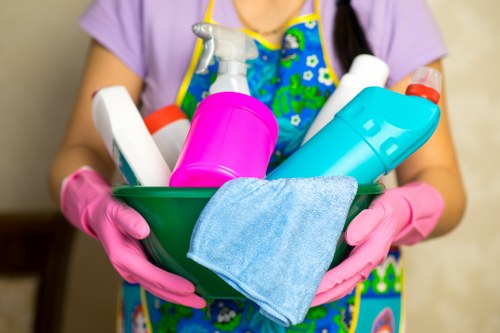
Cleaning products must be handled with care and stored in a secure, labelled location. Staff are expected to read product instructions, understand dilution ratios, and never mix chemicals unless specifically authorised. Bleach, disinfectants, descalers, and solvents can all present health risks if used incorrectly. Gloves, masks, or eye protection must be worn whenever required by the task or product guidance. The company expects all cleaners to use protective equipment correctly and to replace damaged items promptly.
Equipment safety is equally important. Vacuum cleaners, steam devices, floor machines, and extension leads must be checked before use and taken out of service if faulty. Cables should be positioned to reduce trip hazards, and electrical appliances must never be handled with wet hands or used in standing water unless they are designed for that purpose. Regular maintenance helps prevent accidents, extends equipment life, and supports consistent standards across all cleaning operations.
 Manual handling is another key area of responsibility. Lifting bags, moving supplies, and shifting furniture can cause strain if done incorrectly. Staff should assess weight and shape before lifting, keep loads close to the body, and ask for assistance with awkward or heavy items. Good posture, controlled movement, and planning the route in advance reduce the chance of injury. Where suitable, trolleys and other aids should be used to minimise physical effort.
Personal hygiene and infection control are essential during all forms of cleaning. Employees should wash hands frequently, avoid touching the face during tasks, and change gloves when moving between contaminated and clean areas. Waste must be segregated and disposed of correctly, especially where there is a risk from sharps, bodily fluids, or hazardous materials. The company treats infection prevention as a core duty rather than an optional extra, particularly when working in shared or high-use environments.
Training and supervision support the practical application of this policy. New staff receive induction covering safe methods, emergency procedures, reporting expectations, and the correct use of equipment and substances. Refresher training is provided when work methods change or when incidents indicate a need for improvement. Supervisors should monitor performance, correct unsafe habits, and encourage open communication so that concerns can be raised early and addressed effectively.
Safe Working Standards
Our operational standards are built around prevention, accountability, and continual improvement. Every cleaning assignment should begin with a brief review of the site, the task, and any special risks. Where work involves chemicals, heights, confined spaces, or potentially contaminated waste, additional precautions must be taken. Staff must remain alert throughout the shift and adapt their approach if conditions change. A clean area is only successful when it is achieved without compromising health or safety.
Emergency procedures must be understood by all personnel. If there is a fire, chemical spill, injury, or other urgent situation, staff should stop work immediately and follow the relevant emergency response. First-aid arrangements, evacuation routes, and incident reporting steps should be known before work starts. In the event of exposure to hazardous substances or a serious accident, prompt action and accurate reporting are essential to protect wellbeing and support later investigation.
We also expect everyone to respect the safety of building users and colleagues. Doors should not be blocked, walkways should remain clear, and equipment should never be left where it could cause a fall. When cleaning around the public, extra care should be taken to avoid noise, disruption, and accidental contact with surfaces that are still damp or under treatment. Good communication, clear signage, and attentive working practices help create a safer environment for all.
Monitoring and review are part of maintaining an effective policy. This document should be reviewed regularly to ensure it remains suitable for the tasks performed and the risks encountered. Feedback from inspections, incident reports, and observations of working practice should inform updates to training, equipment selection, and procedural controls. Where improvements are identified, they should be implemented promptly and communicated clearly to everyone affected.
 Disciplinary action may be taken where serious or repeated breaches of safety rules occur, particularly if a person ignores instructions, uses unsuitable products, or fails to report a hazard. However, the main aim of this policy is not punishment; it is prevention. We want every cleaner to feel confident that safe work is supported, expected, and properly resourced. A positive safety culture depends on diligence, professionalism, and mutual respect.
 In summary, this health and safety policy for Cleaners Greenwich reflects our commitment to safe, efficient, and responsible cleaning services. By managing risks, using equipment correctly, handling substances carefully, and maintaining strong hygiene standards, we protect people as well as property. Everyone involved in the work must contribute to this aim and treat safety as an everyday professional responsibility.